
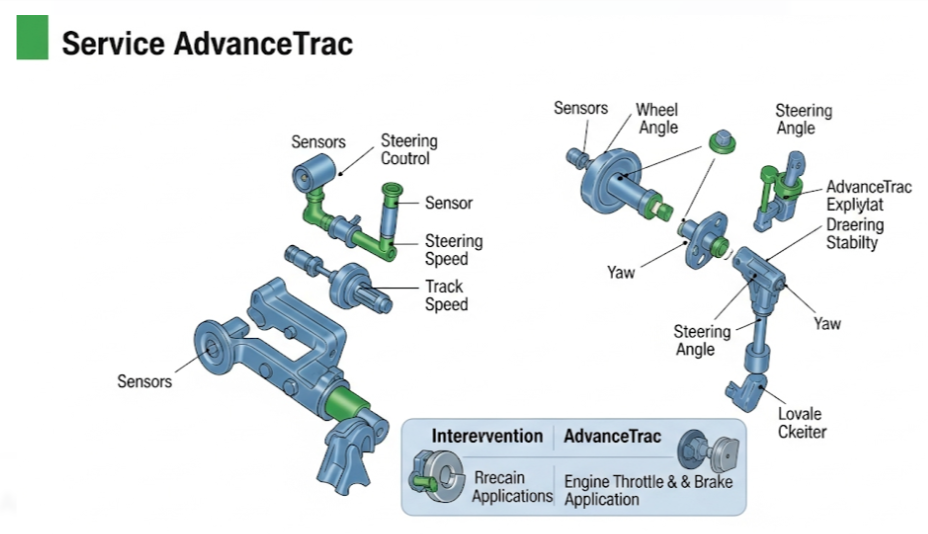

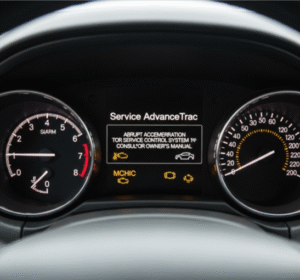
The other day, my coworker was telling me about his motivation for going to work—pretty normal stuff, right? He was taking a sharp curve on the off-ramp in his Ford and felt it tug just a little. Nothing crazy, but it got his attention. Then he saw it—that little dashboard light he’d never noticed before: “Service Advancetrac.”
And immediately, that sinking feeling hit him. You know the one—you see a new warning light and suddenly your brain is filling in horror stories: “Yep, the whole car’s gonna blow up, I’ll be paying thousands.” Classic.
Instead of freaking out and heading straight to the shop, Jason did something smart: he called the Service Advancetrac helpline. He was half-expecting the person on the other end to be like, “Uh… good luck.” But nope. The support worker was composed, understanding, and very beneficial. After asking him a few simple questions regarding the car’s operation, they led him through a few fast tests he could perform on his own. By the time he hung up, Jason was pleased rather than terrified.
It really made me think: we see a warning light and automatically assume the worst. Most of the time, it’s not catastrophic—it’s just your car going, “Hey, something’s off, can you check me out?” So let’s break down what this Service Advancetrac thing really is, why it happens, and what you can do about it without losing your mind.
What Is AdvanceTrac, Anyway?
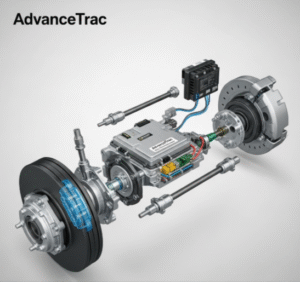
Think of AdvanceTrac like your car’s invisible safety buddy. It’s Ford’s electronic stability control system—basically, it’s there to stop you from spinning out when things get tricky.
You’ve probably heard of ABS (anti-lock brakes) and traction control. To make sure those two are working together, AdvanceTrac serves as a kind of coordinator.
Picture this: you hit a patch of ice, & you swerve suddenly to avoid something. In an older car, you might skid or spin out. AdvanceTrac is watching whether your steering matches how the car is moving. If it notices you’re slipping (mechanics call it oversteer or understeer), it steps in fast. It could slightly lower engine power or apply the brakes to one tire to keep you on course. You won’t even notice it because it usually operates in the background without making any noise.
Why Does the “Service Advancetrac” Light Come On?
Here’s the scary part for most people: that light doesn’t automatically mean your car is about to die. Think of it more like your car waving a little red flag, saying, “Hey, something’s up here.”
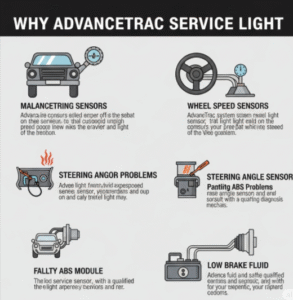
Here are the usual suspects:
- Wheel Speed Sensors – There’s one on each wheel. They tell the system how fast each wheel is spinning. If one gets dirty, damaged, or goes bad, the system gets confused.
- Steering Angle Sensor – Tells the computer how much you’re turning the wheel. If it’s off, your car might be like, “Wait… which way are we going?”
- ABS Module Problems – AdvanceTrac works hand-in-hand with ABS. If the module has an issue, the light pops. This one’s pricier, but not the most common.
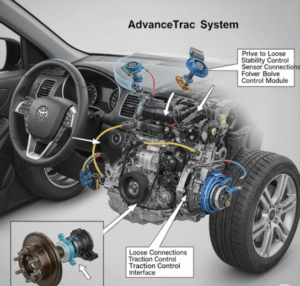
- Wiring Issues – Wires live in harsh conditions under your car—heat, dirt, water, salt, and sometimes even critters. A loose or corroded wire can cause the light.
- Low Brake Fluid – Weird, right? But your brakes and AdvanceTrac are connected. Low fluid can shut the system down to keep you safe.
Is It Safe to Drive With the Light On?
Yeah… kind of, but cautiously.
Basically, when the light’s on, AdvanceTrac is off. Your brakes and steering still work, but you’ve lost that extra safety net. You may most likely reach a repair business fine on dry roads. Conditions that are slick, wet, or icy? Not a great idea. Honestly, the safest bet is to have it checked as soon as possible.
How to Handle the Service Advancetrac Light
Here’s a practical approach anyone can follow, even if you aren’t a car person:
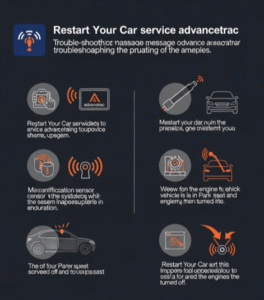
- Step 1: Try a Classic Reset
Sometimes electronics just hiccup. Turn off the car, lock it, wait five minutes, then restart. Light gone? Maybe it was just a glitch. If it comes back, move on.
- Step 2: Look Around
Look at your car. Are there any obvious damage, frayed wires, or loose connections? There are instances when the problem is directly in front of you.
service advancetrac - Step 3:Check the brake fluid .
Check the amount of brake fluid by popping the hood. Between “Min” and “Max”? Good. Low? Top it off, but also consider that your brake pads might be worn—still worth getting a mechanic to check.
service advancetrac - Step 4: Pull Trouble Codes
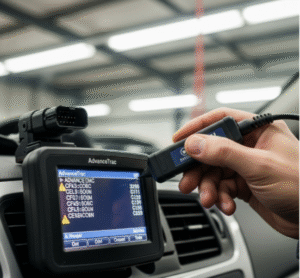
Modern cars save error codes when lights come on. An OBD-II scanner can read them, and a lot of auto parts stores will do this for free. The code won’t fix your car, but it’ll tell you what’s likely wrong—like a bad wheel speed sensor.

service advancetrac - Step 5: Call a Pro
If the light sticks around, it’s time for a mechanic. They have the tools to test sensors, wiring, and modules properly.

service advancetrac
How Much Will This Cost?
- Money talk, ugh. Costs vary depending on what’s actually broken:
- Wheel Speed Sensor: $100–$250 per wheel
- Steering Angle Sensor: $150–$500 (with calibration)
- ABS Module Repair/Replacement: $500–$1,000+
- Wiring Repairs: $100–$300
Pro tip: diagnose before replacing anything. Spending $100 on a proper scan can save you from throwing cash at parts you don’t even need.

Can You Just Turn AdvanceTrac Off?
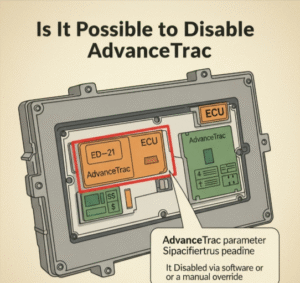
Yep, most Fords have a button for that. Useful if you’re stuck in mud or snow and need the wheels to spin.
But here’s the thing: pressing the button turns it off on purpose. The Service Advancetrac light means the system turned itself off because something’s wrong. Pressing the button won’t fix that.
How to Keep the Light From Coming Back
Little maintenance habits can help:
- During tire rotations or oil changes, have regular brake examinations.
- After muddy or salty journeys, wash underneath the vehicle.
- Pay attention to little tugs, sounds, or vibrations.
- Don’t be too hard on the automobile, drive carefully, and stay away from curbs.
- Big headaches later can be avoided with a little effort today
Final Thoughts
The Service Advancetrac light isn’t the end of the world. It’s just your car asking for attention. Now you know what usually causes it, what you can do yourself, when to call a pro, costs, & how to prevent it in the future.
Next time it pops on, take a deep breath. Do not freak out. Follow a few simple steps, & then you will handle it just fine.
Your automobile is simply quietly watching out for you in the background; it is not out to get you. Treat it well, check it regularly, & you will both be happy.
Read more: Koodo Customer Service ❤️
10 FAQS:
What is meant by Service AdvanceTrac?
It’s an alert that the electronic stability control system in your Ford requires maintenance.
Can I drive while the Service AdvanceTrac light is visible?
Usually, sure, but have it checked out right away because you’ll have less stability and traction.
What is the reason of the Service AdvanceTrac light?
Common reasons include malfunctioning wheel sensors, a malfunctioning ABS module, difficulties with the steering angle sensor or wiring issues.
How can the Service AdvanceTrac alert be resolved?
Attempt to restart your vehicle, inspect sensors and connections, add brake fluid, or get in touch with a specialist.
What is the price of fixing AdvanceTrac?
Depending on which item has to be replaced, repairs can cost anywhere from $100 to $1,000.
Is it possible to disable AdvanceTrac?
The service light indicates that it needs to be repaired, although some automobiles allow you to temporarily disable it.
Is Service AdvanceTrac caused by low brake fluid?
This alarm can occasionally be triggered by low brake fluid.
What occurs if the Service AdvanceTrac light is ignored?
In slick circumstances, you run the danger of losing further stability and traction assistance.
Is ABS impacted by AdvanceTrac?
AdvanceTrac and ABS do operate together; if one fails, the other can be impacted as well.
Can I use Service AdvanceTrac when driving in the snow?
To keep safe on ice or snowy roads, it is not advised; have it fixed.